


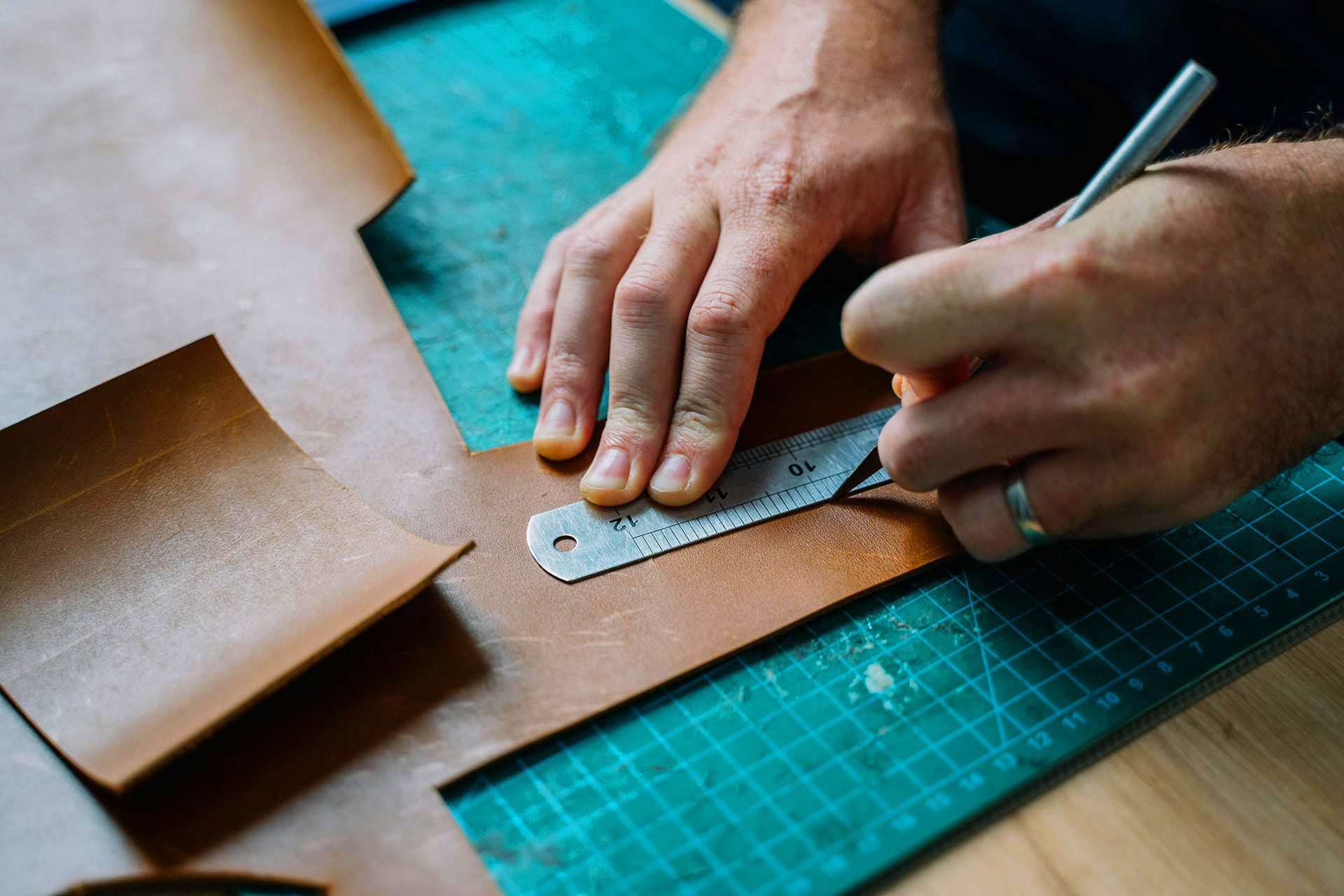
28 Nov Stop Fighting Your Leather. Let the Right Tool Do the Work
If you’ve ever found yourself pushing too hard, cutting too deep, or redoing the same line again and again, this one’s for you. Leather shouldn’t feel like a battle. When every move feels like resistance, it’s not your skill holding you back. It’s your tools.
Good leather has personality, it’s tough, flexible, alive. But it also demands respect. And when the wrong tool meets the right material, even the best technique can’t save the outcome.
The Leather Always Tells You When Something’s Wrong
Listen to the sound of a blade. The way it slides, or doesn’t. Leather talks back if you’re paying attention. When it tugs, frays, or squeaks against your edge, it’s a warning. The tool isn’t doing its job.
Professionals don’t muscle through those moments. They stop. Adjust. Switch tools or sharpen blades before frustration sets in.
A clean cut feels smooth. Effortless. It doesn’t fight you, it flows.
Tools Are Extensions, Not Obstacles
The right tools don’t just make the job easier; they make it possible.
When your knife, groover, or beveler fits your hand and purpose, you stop forcing the work. The pressure evens out. The results get cleaner. You move faster without meaning to. That’s the quiet difference between fighting leather and working with it.
Look at the essentials most pros never compromise on:
- A properly sharpened knife: no skipping, no drag, just glide.
- A balanced mallet: absorbs shock instead of sending it to your wrist.
- Well-fitted bevelers and slickers: shape and polish with control, not brute strength.
- Reliable stitching tools: align every hole, keep every pull consistent.
They don’t own hundreds of tools, they own the right ones.
When the Tool Works, So Do You
There’s a kind of flow that happens when everything clicks. You’re not thinking about angles or pressure. You’re just present, hands moving, eyes tracking, leather responding.
That’s what craftsmanship feels like when the tools stop getting in the way. But the moment your hand aches or the material resists, you lose that flow. The work stiffens. And it shows.
A good craftsman knows how to listen, not just to the leather, but to the way their tools move through it.
The Quiet Art of Working With Leather
The beauty of leatherwork isn’t in how hard you work, it’s in how naturally it comes together. When your tools fit your craft, you don’t need to wrestle for results.
You just let your hands move. The cuts stay clean. The edges glow. The piece feels alive.
So stop fighting your leather. Let the right tool take the lead. It already knows the way, you just have to trust it.