


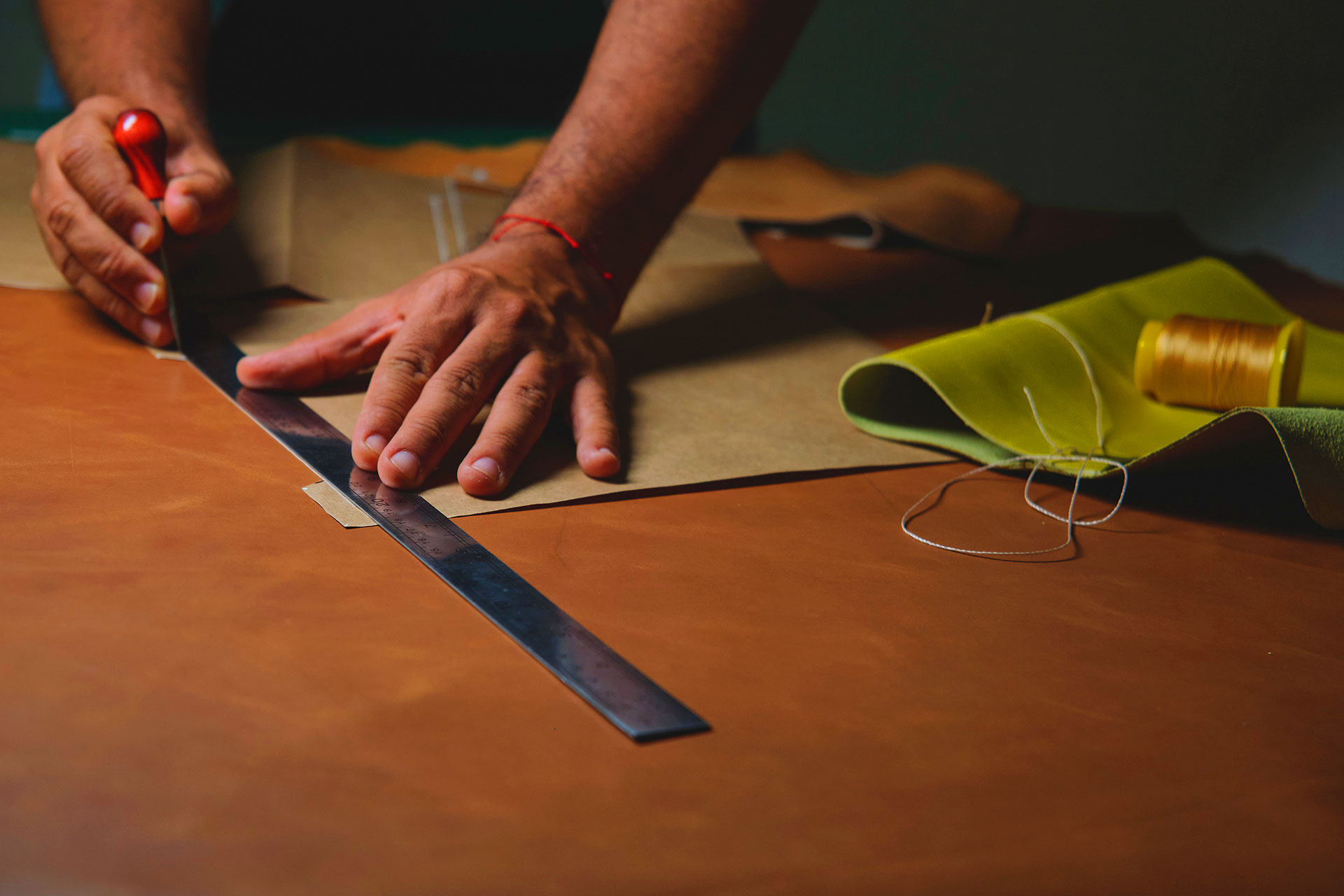
12 Dec Why Every Cut Tells a Story About Your Tools
In leatherwork, every cut has a personality. Some glide like a whisper. Some drag. Some chatter across the surface in tiny vibrations you didn’t ask for. And whether you notice it or not, each of those cuts tells a story, not about your skill, but about your tools.
Tools speak through the marks they leave behind. Clean cuts. Ragged edges. Smooth turns. Hesitant curves. They reveal how well your tools are maintained, how well they’re designed, and how well they fit your hand.
A cut is never just a cut. It’s a message.
Sharp Tools Show Confidence
When a blade is sharp, it moves with purpose. No hesitation. No wobble. You guide it, and it obeys. The cut follows your intention cleanly and consistently.
A sharp blade tells the world:
- You care about your craft
- You maintain your tools
- You understand precision
- You’re paying attention
- You respect the material you’re working with
Sharpness isn’t about danger. It’s about clarity.
Dull Tools Reveal the Hidden Struggle
Dull blades leave cloudy marks, edges that fray instead of slicing. They force your hand to press harder, which throws off your control. They create fatigue that you can feel hours later.
When a cut looks tired, the tool probably is. Dull tools whisper: “This wasn’t as smooth as it could have been.”
And the leather remembers.
The Right Tool Makes the Right Line
Leatherworkers learn quickly that having “a knife” isn’t enough. The type of knife matters. The shape matters. The balance, the handle, the weight, they all show up in the line you leave behind.
Round knives make sweeping arcs effortless. Utility blades carve straight lines with discipline. Beveling tools shape depth that looks intentional, not accidental. When the cut matches the craft, the tool did its job.
When it doesn’t, the mismatch is obvious.
Technique Improves. Tools Assist
Skill and technique matter, of course. But no amount of experience can compensate for a tool that fights you.
Great tools don’t get in the way. They feel like intuition, not equipment. They help your hands move the way your mind imagines.
Better tools create:
- Fewer mistakes
- Smoother edges
- More predictable outcomes
- Less physical strain
- More enjoyable work sessions
Your technique grows faster when your tools support it instead of resisting it.
Maintenance Leaves Its Mark Too
Every cut tells you how well your tools were cared for. A blade that’s cleaned, oiled, and sharpened regularly glides differently. It leaves behind a cut that looks intentional and calm. Neglected tools, on the other hand, leave cuts that look exactly like what they are, forced, uneven, stressed.
Maintenance is not a chore. It’s part of the craftsmanship.
The Leather Sees Everything
Leather doesn’t lie. It captures every movement, every hesitation, every imperfection, and every moment of mastery. Your tools leave their fingerprints in the grain, telling a story that lasts as long as the piece itself.
If you want your work to speak well of you, make sure your tools tell the right story.