


19 May Essential Leather Making Tools and Supplies Every Crafter Needs to Master
The world of leather crafting opens up endless creative possibilities, but only when you’re equipped with the right tools and materials. Whether you’re dreaming of crafting your first wallet or perfecting advanced techniques like saddle stitching, understanding the essential leather making tools and supplies can make the difference between amateur results and professional-quality pieces that stand the test of time.
Essential Cutting Tools for Leather Work
Precision cutting forms the foundation of any leather project, and having the right cutting tools transforms a frustrating experience into a satisfying creative process. A quality rotary cutter paired with a self-healing cutting mat provides clean, straight edges that are nearly impossible to achieve with regular scissors. For curved cuts and intricate designs, a sharp swivel knife allows you to navigate complex patterns with control and accuracy.
Round knives, also known as head knives, remain the traditional choice for professional leatherworkers who value versatility and control. These crescent-shaped blades excel at both straight cuts and curves, allowing you to rock the blade through thick leather with minimal effort. Utility knives with replaceable blades offer an affordable starting point, though investing in specialty leather knives pays dividends as your skills advance.
Stitching and Sewing Supplies
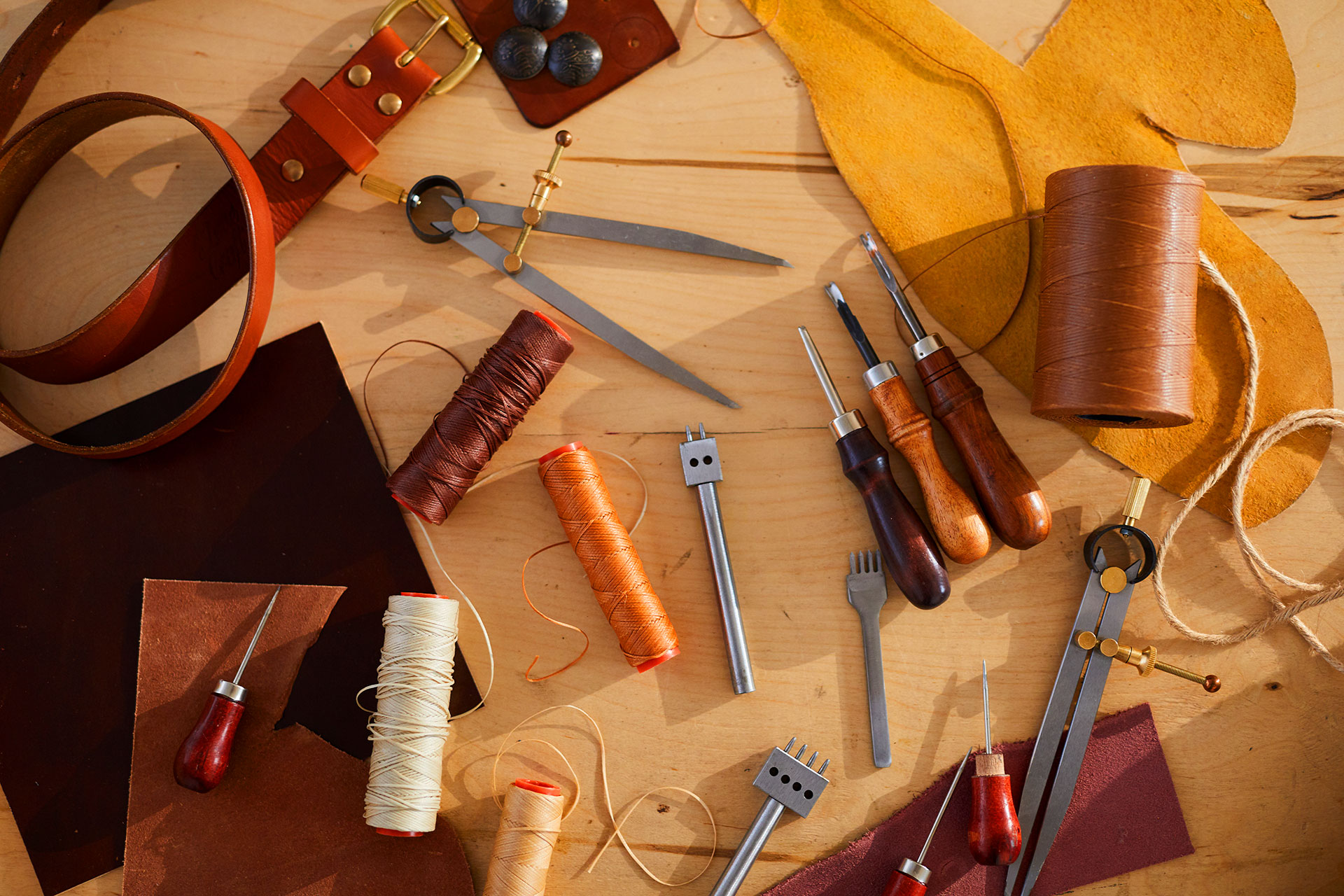
Hand stitching creates the strongest, most durable seams in leather goods, far surpassing machine stitching for longevity. The basic stitching toolkit includes:
- Stitching chisels or pricking irons: Create evenly spaced holes for consistent stitching
- Harness needles: Blunt-tipped needles that won’t split your thread
- Waxed thread: Available in various weights and colors for different projects
- Stitching awl: Opens holes and guides needles through thick leather
- Thread snips: Clean cuts without fraying
Mastering the saddle stitch technique with these tools creates seams that actually become stronger if one thread breaks, unlike machine stitching, which can unravel completely. Choose thread weight based on your project size, thinner threads for wallets and card holders, and thicker options for bags and belts.
Edge Finishing Tools and Techniques
Raw leather edges can make even the most carefully constructed piece look unfinished and amateurish. Edge bevelers remove sharp corners, creating rounded profiles that feel comfortable in hand and resist wear. After beveling, edge slickers or burnishers compress and polish the fibers, creating a smooth, sealed surface.
Many leather craftsmen achieve factory-perfect edges through a combination of proper tool selection and proven finishing techniques, transforming rough cuts into glass-smooth surfaces that rival commercial products. Edge paint or dye provides color consistency, while gum tragacanth or edge coating creates a protective seal that prevents moisture damage and fraying.
Leather Making Tools and Supplies for Surface Treatment
Surface decoration elevates functional leather goods into artistic expressions. Stamping tools create repeating patterns and borders, while carving tools allow for intricate custom designs. A basic stamping set includes:
- Bevelers: Create depth and dimension in carved designs
- Background tools: Add texture behind main design elements
- Border stamps: Frame your work with decorative edges
- Letter and number sets: Personalize projects with monograms or dates
Proper case preparation ensures crisp, lasting impressions. A spray bottle for moistening leather, a marble slab or granite plate for a solid work surface, and a rawhide or poly mallet for striking tools form the foundation of any stamping setup.
Essential Leather Types and Materials
Understanding leather grades and types prevents costly mistakes and ensures project success. Vegetable-tanned leather accepts tooling, stamping, and dyeing beautifully, making it ideal for belts, bags, and decorative pieces. Chrome-tanned leather offers softness and color variety perfect for garments and upholstery, but won’t hold tooled impressions.
Leather Weight Guide:
- 2-3 oz: Lightweight projects like bookmarks and jewelry
- 4-5 oz: Wallets, card holders, and small accessories
- 6-7 oz: Bags, journal covers, and light belts
- 8-9 oz: Heavy belts, holsters, and armor
- 10+ oz: Saddles and heavy-duty straps
Adhesives and Hardware
Contact cement creates permanent bonds for lining materials and reinforcement layers, while rubber cement allows repositioning during assembly. Water-based adhesives offer low odor and easy cleanup but require longer drying times. Choose adhesives based on your specific needs, flexibility, permanence, and working time; all factors into the decision.
Quality hardware transforms handmade items into professional products. Rivets provide strong mechanical connections without stitching, while snaps, buckles, and D-rings add functionality. Investing in proper setting tools for each hardware type ensures secure attachment without damaging your leather or the hardware itself.
Workspace Organization and Tool Maintenance
An organized workspace dramatically improves efficiency and project outcomes. Wall-mounted tool racks keep frequently used items within reach while protecting cutting edges. Drawer organizers separate small supplies like needles, thread, and hardware, preventing loss and damage.
Regular tool maintenance extends lifespan and maintains performance. Sharpen knives frequently using appropriate stones or strops—dull blades require excessive pressure, leading to mistakes and injuries. Oil moving parts on tools like revolving punches, and keep cutting mats clean to prevent blade damage.
Storage Solutions for Leather and Supplies
Proper leather storage prevents warping, cracking, and discoloration. Store hides flat or rolled with the grain side out, never folded. Keep leather away from direct sunlight and maintain moderate humidity levels. Small scraps organize well in clear bins sorted by weight and type, making selection easy for future projects.
Building Your Tool Collection Strategically
Starting with quality basics beats accumulating inferior tools that frustrate and limit your progress. A sharp knife, basic stitching supplies, and edge finishing tools enable countless projects. Add specialized tools as specific needs arise rather than purchasing complete sets with items you may never use.
Consider purchasing used tools from retiring craftspeople or estate sales. Vintage tools often feature superior steel and craftsmanship compared to modern equivalents. Clean and restore old tools carefully, removing rust and sharpening edges, brings most vintage pieces back to working condition.
The journey into leather crafting rewards patience and practice with the satisfaction of creating lasting, functional art. Starting with essential leather making tools and supplies, then gradually expanding your collection based on project needs and developing interests, creates a sustainable path toward mastery. Each tool mastered and technique learned opens new creative possibilities, transforming raw materials into cherished handmade goods that improve with age and use.