

06 Dec The Old-School Tools That Still Crush Modern Leatherwork
Leatherwork keeps evolving, new machines, new gadgets, new trends that promise faster cuts or cleaner edges. But walk into any workshop run by someone who actually knows their craft, and you’ll notice something surprising: many of the most trusted tools look almost identical to the ones used a century ago.
Old-school tools still dominate leatherwork, not because of nostalgia, but because they work, beautifully, reliably, and repeatedly. Some things never go out of style. Precision is one of them.
Why Traditional Tools Still Matter
Modern tools are convenient. They can speed up production and help beginners get started. But traditional hand tools carry something machines can’t replicate: feel.
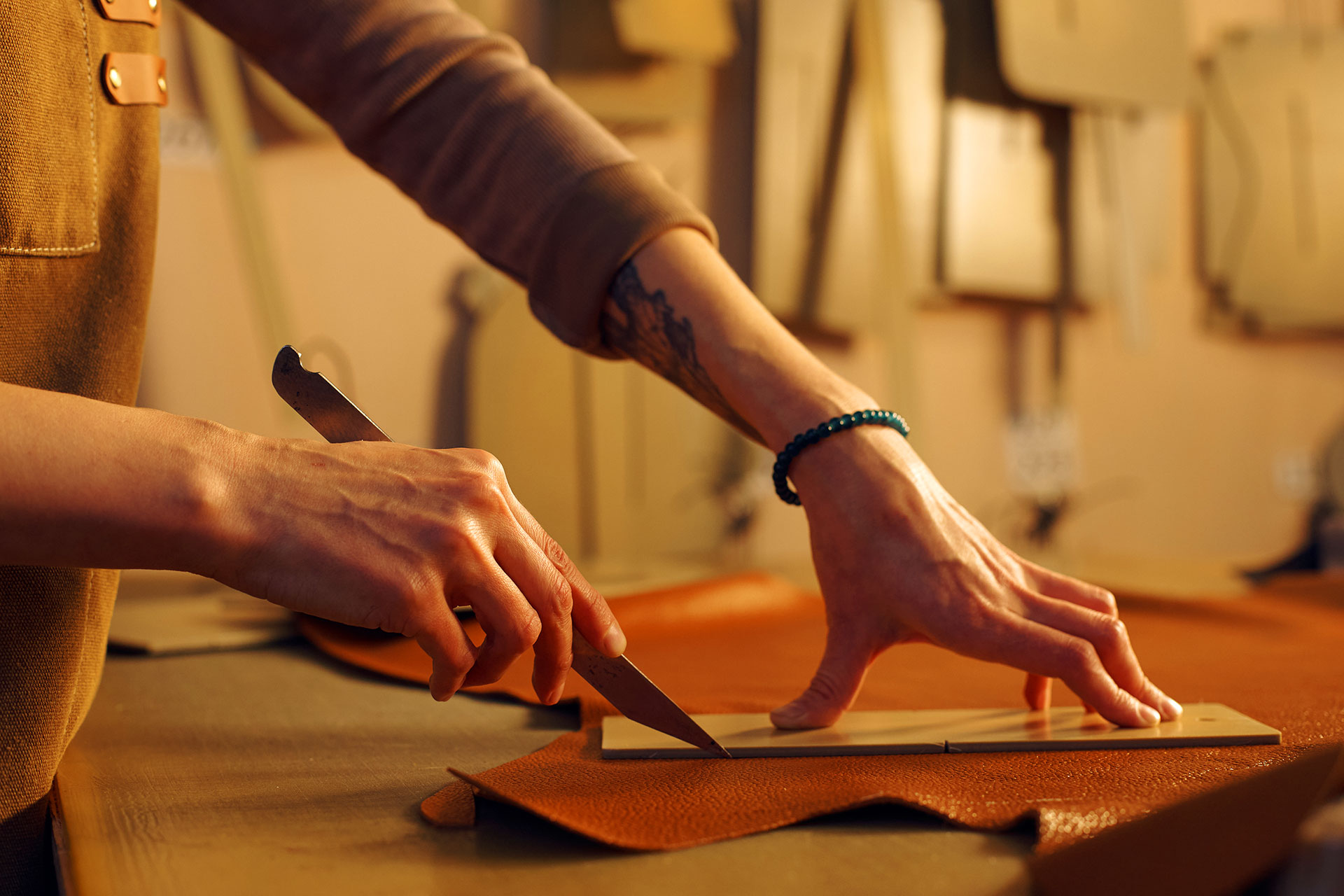
A good awl glides exactly where you guide it. A trusted edge beveler sings when it hits the right angle. A quality knife becomes an extension of your hand.
Leather isn’t a uniform material. It varies, stretches, resists, and softens. Traditional tools adapt in real-time because your hands adjust in real-time. That connection keeps old-school tools relevant no matter how modern the workshop becomes.
The Classics That Haven’t Lost Their Bite
Certain tools hold their ground because they simply refuse to be outperformed. You’ll see them in every serious leatherworker’s kit.
These old-school essentials still crush modern alternatives:
- Traditional round knives that carve with unmatched control and grace
- Hand punches that deliver clean, crisp holes with satisfying precision
- Edge bevelers shaped to remove just the right sliver of material
- Stitching wheels that guide spacing with old-world charm and accuracy
They may look simple. They’re anything but.
Control, Not Speed, Makes Leatherwork Shine
Leatherwork rewards patience, not rush. One slip of a blade leaves a mark you can’t take back. An uneven stitch line breaks the whole rhythm of a piece. Old-school tools give artisans the slow, steady control that real craftsmanship depends on.
You feel that control in smoother cuts, straighter lines, better consistency, less fatigue, and far fewer mistakes. When your hands set the pace, the work gets better. Machines move fast. Craftsmen move right.
Hand Tools Age With You, and Improve
Unlike disposable modern gadgets, traditional leather tools gain character with use. The handle molds to your grip. The blade sharpens exactly the way you prefer. The tool becomes yours in a way mass-produced electronics never can.
A well-maintained vintage tool often performs better than a fresh-out-of-the-box modern one.
There’s something deeply satisfying about that, knowing your tools grow more capable the more you rely on them.
Conclusion
Leatherwork is one of the few crafts where time doesn’t erase tradition. It enriches it. The old methods remain because the results still win. Tools built decades ago cut cleaner, stitch straighter, and shape leather with a responsiveness machines can’t imitate.
Old-school tools don’t just survive. They lead.
They remind us that craftsmanship isn’t about chasing trends, it’s about building things that last.