


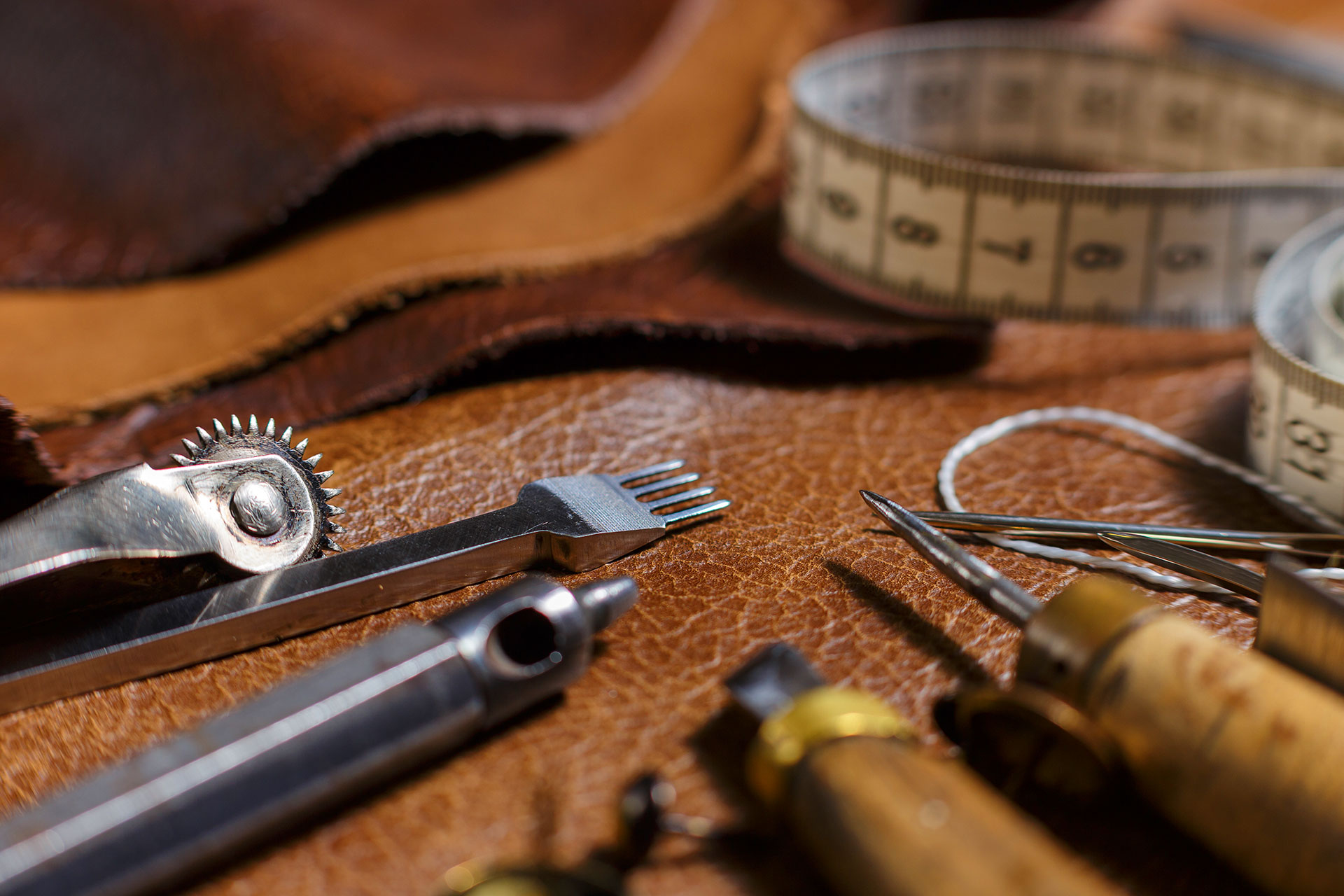
26 May Essential Tools for Leather Work: Your Complete Guide to Professional Crafting
Whether you’re just starting your leather crafting journey or looking to upgrade your workshop arsenal, having the right tools transforms raw hide into stunning works of art. The difference between amateur and professional results often comes down to the quality and selection of tools at your disposal. From precision cutting instruments to specialized finishing equipment, each tool serves a specific purpose in bringing your leather projects to life.
Essential Cutting Tools for Leather Work
At the heart of any leather project lies the need for clean, precise cuts. A sharp rotary cutter paired with a self-healing cutting mat forms the foundation of accurate leather cutting. These tools allow you to make straight lines effortlessly while protecting your work surface.
Round knives, often called head knives, represent the traditional choice for professional leatherworkers. Their curved blade design enables both straight cuts and intricate curves with a single rocking motion. Learning to master a round knife takes practice, but the versatility and control it offers are unmatched.
Leather shears and utility knives round out your cutting arsenal. While shears excel at trimming thin leather and making quick adjustments, a sharp utility knife with replaceable blades handles detail work and tight corners where larger tools can’t reach.
Stitching and Punching Tools
Creating durable, attractive seams requires specialized stitching tools that work specifically with leather’s unique properties. Diamond-shaped stitching chisels create angled holes that guide your needle at the perfect angle for saddle stitching – the strongest hand-stitching method available.
- Pricking irons: Mark stitch spacing without fully penetrating the leather
- Stitching awls: Pierce holes for thick leather that chisels can’t penetrate
- Overstitch wheels: Create decorative impressions along seam lines
- Edge creasers: Define borders and guide straight stitching lines
Quality needles designed specifically for leather work feature blunt tips that follow the pre-punched holes rather than creating new ones. Paired with waxed thread, these needles glide through leather smoothly without damaging the material.
Edge Finishing Tools for Professional Results
The difference between hobbyist and professional leather goods often shows most clearly in the edge treatment. Edge bevelers remove sharp corners, creating smooth, rounded edges that feel comfortable in hand and resist wear over time.
Burnishers, whether wooden or made from specialized materials like cocobolo, compress and polish leather edges to a glass-like finish. Combined with edge paint or burnishing compounds, these tools for leather work create edges that rival factory-made products.
Pro Tip: Start with a coarse grit sandpaper (220-grit) to even out edges, then progress to finer grits (400-800) before burnishing for mirror-like results.
Stamping and Carving Tools
Decorative leather work requires stamps and carving tools that create lasting impressions in vegetable-tanned leather. Bevelers, backgrounders, and veiners form the basic carving tool set, allowing you to create dimensional designs with depth and texture.
Letter and number stamps enable personalization, while geometric and decorative stamps add visual interest to plain surfaces. A quality swivel knife serves as your primary carving tool, cutting design outlines that other tools then embellish.
Investing in a proper stamping surface, either a marble slab or specialized poundo board, ensures clean, consistent impressions without damaging your tools or work surface.
Hardware Setting Tools
Professional leather goods require secure hardware installation, from simple rivets to complex snap fasteners. A rotary punch creates precise holes in multiple sizes, while individual hole punches offer portability and precision for specific applications.
- Rivet setters: Secure both rapid rivets and double-cap rivets
- Snap setters: Install various snap types with professional results
- Eyelet setters: Add reinforced holes for lacing or decoration
- Chicago screw tools: Install removable fasteners for adjustable designs
Measuring and Marking Essentials
Precision in leather work starts with accurate measurement and marking. Steel rulers with cork backing prevent slipping while protecting leather surfaces from scratches. Dividers, also called wing dividers, maintain consistent distances from edges when marking stitch lines or creating parallel guidelines.
Scratch awls serve double duty, marking cut lines that won’t rub off and piercing pilot holes for stitching. Silver marking pens show clearly on dark leather and disappear with gentle heating, while leather-safe chalk works perfectly on lighter materials.
Specialized Tools for Advanced Techniques
As your skills develop, specialized tools open new creative possibilities. Skiving knives thin leather edges for seamless overlaps and refined construction. French edge tools, also called fileteuse, create decorative heated lines that add elegance to luxury goods.
In any seasoned leather workshop, you’ll find craftspeople who understand that investing in quality tools pays dividends through years of reliable service. These time-tested implements become extensions of the artisan’s hands, enabling precision and consistency that cheaper alternatives simply cannot match.
Edge paint rollers apply consistent coatings for professional edge treatment, while creasing tools heated over alcohol lamps create permanent decorative lines. These advanced tools for leather work separate professional results from amateur attempts.
Tool Maintenance and Care
Protecting your tool investment requires regular maintenance. Sharp cutting tools need frequent stropping on leather charged with polishing compound. Oil moving parts regularly to prevent rust and ensure smooth operation.
Store edge tools properly in tool rolls or racks to protect cutting edges. Keep wooden handles conditioned with appropriate oils to prevent cracking. Clean stamps and punches after each use to prevent compound buildup that affects impression quality.
Storage Best Practices:
- Maintain moderate humidity (40-60%) to prevent rust and wood damage
- Use silica gel packets in tool storage areas
- Apply light machine oil to metal surfaces before long-term storage
- Keep cutting tools separate to prevent edge damage
Building Your Tool Collection Strategically
Starting your leather working journey doesn’t require purchasing every tool at once. Begin with essential cutting and stitching tools, then expand based on your project interests. Quality matters more than quantity, a few well-chosen professional tools outperform a workshop full of inferior implements.
Consider purchasing tools in sets when starting out, as manufacturers often bundle complementary items at better prices. As you identify your preferred leather working style, invest in specialized tools that support your unique creative vision.
Join leather working communities online and locally to learn which tools experienced craftspeople recommend. Tool swaps and estate sales often yield vintage tools that, with proper restoration, perform better than modern equivalents.
Safety Equipment and Workspace Tools
Professional leather work demands attention to safety. Cut-resistant gloves protect hands during lengthy cutting sessions, while a properly ventilated workspace prevents inhaling harmful fumes from dyes and finishes.
A sturdy workbench at the correct height prevents fatigue and improves accuracy. Good lighting, particularly adjustable LED lamps, reduces eye strain and reveals imperfections before they become permanent. Non-slip mats keep projects stable during tooling and assembly.
The journey into leather crafting becomes infinitely more rewarding with the right tools for leather work at your disposal. From basic cutting implements to specialized finishing equipment, each tool serves a purpose in transforming raw materials into lasting treasures. By investing wisely in quality tools, maintaining them properly, and gradually expanding your collection based on actual needs, you’ll build a workshop capable of producing professional quality leather goods that stand the test of time.
Remember that mastery comes not from having every tool available, but from understanding and skillfully using the tools you have.