


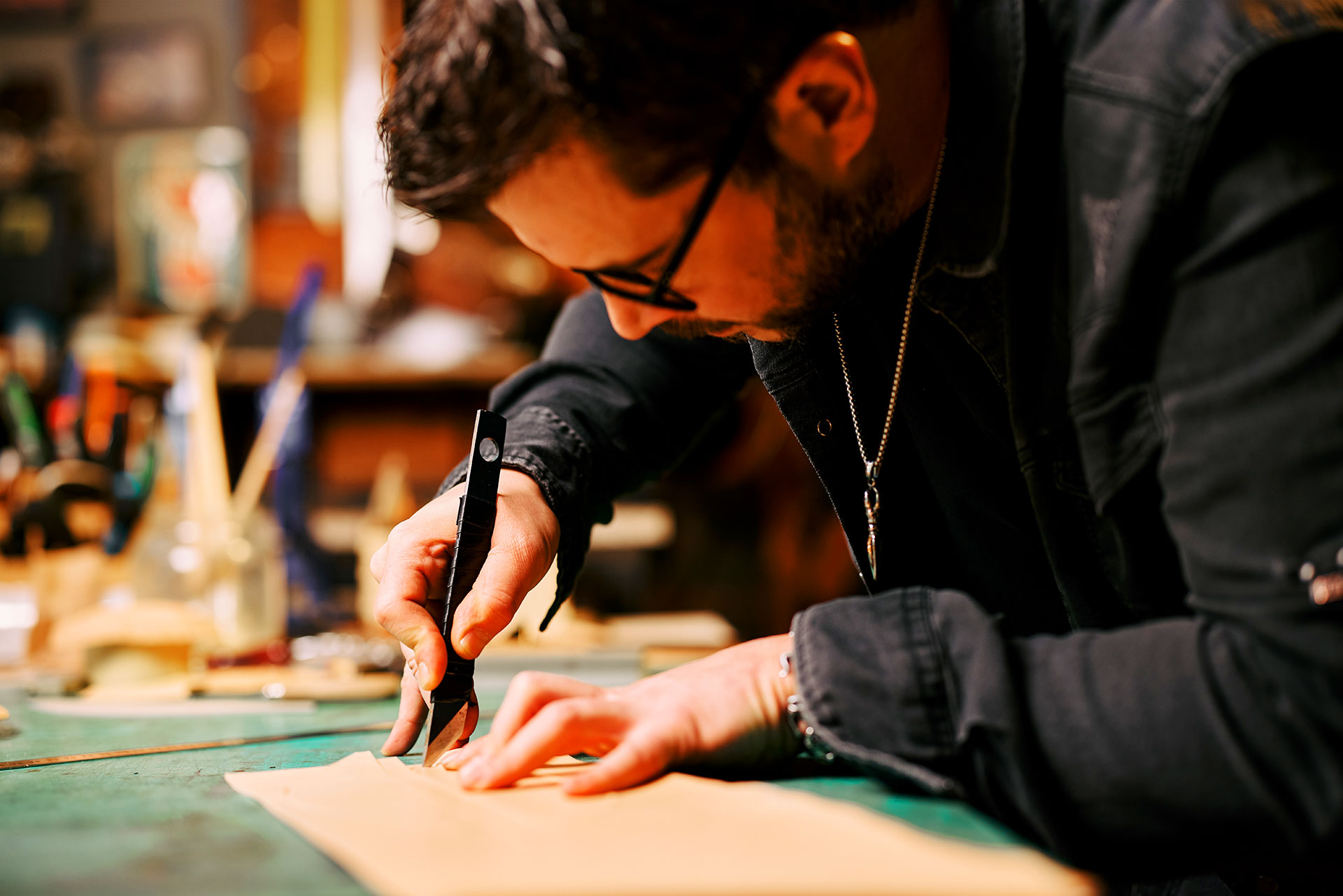
19 Aug 6 Cutting Tools Every Leatherworker Needs for Flawless Edges
Struggling to get clean, precise cuts on your leather projects no matter how careful you are? The problem usually isn’t your skill level. It’s your blade. Leatherworking rewards patience, but even the most patient crafter will hit a wall if they’re using the wrong tool for the job. Ragged edges, crooked lines, and wasted material often trace back to one simple issue: not knowing which cutting tool actually fits the task at hand.
What Are The Best Cutting Tools For Leather?
The best cutting tools for leather include a rotary cutter for straight lines, a utility or head knife for detailed shaping, leather shears for curves, swivel knives for carving, and strap cutters for uniform strips. Each tool serves a specific function, and combining them gives crafters clean, professional results across nearly any project.
Once you understand what each blade is designed to do, choosing the right one stops feeling like guesswork. Below, we’ll break down the tools that matter most, why they matter, and how to pick the right one for your next project.
Why The Right Blade Changes Everything
Leather isn’t like paper or fabric. It has grain, thickness, and density that shift depending on the hide and tanning process. A blade that glides through vegetable-tanned cowhide might drag or tear through softer garment leather.
This is why professional leatherworkers rarely rely on a single knife. They build a small arsenal, each piece chosen for a specific stage of the project. If you’re just starting out, understanding this logic will save you time, material, and frustration.
Essential Cutting Tools Every Leatherworker Should Own
1. Rotary Cutters
Rotary cutters are ideal for long, straight cuts through multiple layers. The rolling blade reduces drag, which means fewer snags and a cleaner edge overall.
- Best for cutting straps, panels, and templates
- Works well on thinner to medium-weight leather
- Offers consistent pressure across long cuts
2. Utility Knives and Head Knives
These are the workhorses of leathercraft. A sharp utility knife handles general shaping, while a head knife excels at skiving and curved cuts thanks to its wide, crescent-shaped blade.
For a deeper breakdown of blade types and how each one performs on different leather weights, this guide on cutting tools for leather walks through six essential options every crafter should have on hand.
3. Leather Shears
Standard scissors struggle with leather’s density, but purpose-built leather shears are engineered with reinforced blades that slice cleanly through curves and irregular shapes without stretching the material.
4. Swivel Knives
If your work involves tooling or carving, a swivel knife is non-negotiable. Its rotating blade allows for smooth, flowing lines, essential for decorative patterns and detailed artwork.
5. Strap Cutters
Need dozens of straps at the exact same width? A strap cutter uses an adjustable guide and blade to produce uniform strips every time, eliminating the guesswork of manual measuring.
6. Round Knives
Round knives, sometimes called head knives in a different shape, are prized for their versatility. Skilled crafters use them for everything from trimming to skiving, all with a single tool.
How To Choose The Right Tool For Your Project
Not every project calls for every blade. Matching the tool to the task keeps your workflow efficient and your edges clean.
- Straight cuts on multiple layers: reach for a rotary cutter
- Detailed shaping or skiving: use a head knife or utility knife
- Curved or irregular shapes: leather shears do the job best
- Decorative carving: a swivel knife gives you control over flow
- Uniform straps: a strap cutter saves time and ensures consistency
Maintaining Your Blades For Long-Term Precision
A dull blade is often more dangerous than a sharp one because it requires extra force, increasing the risk of slipping. Regular honing and stropping keep edges sharp and reduce the wear on both the tool and the leather.
Store blades in a dry space, away from moisture that can dull or rust the metal over time. A consistent maintenance routine extends the life of your tools and keeps every cut as clean as the last.
Final Thoughts
Cutting tools for leather aren’t one-size-fits-all, and that’s actually good news. It means there’s a specific blade designed to solve whatever cutting challenge you’re facing, whether that’s straight panels, decorative carving, or perfectly uniform straps. Once you understand what each tool does best, your projects become faster, cleaner, and far more professional.
Frequently Asked Questions
What is the most versatile cutting tool for leather?
A head knife or round knife is often considered the most versatile since it handles trimming, shaping, and skiving in one tool.
Do I need a rotary cutter if I already have a utility knife?
Yes, especially for long straight cuts. Rotary cutters reduce drag and produce more consistent lines than a standard blade.
Can I use regular scissors on leather?
Regular scissors can damage the material or produce uneven edges. Purpose-built leather shears are designed to handle the density and grain of leather safely.
How often should I sharpen my leather cutting tools?
This depends on frequency of use, but most crafters strop their blades before each session and fully sharpen every few weeks.
What tool is best for beginners?
A quality utility knife is usually the easiest starting point, offering control and versatility while you build skill with more specialized blades.