


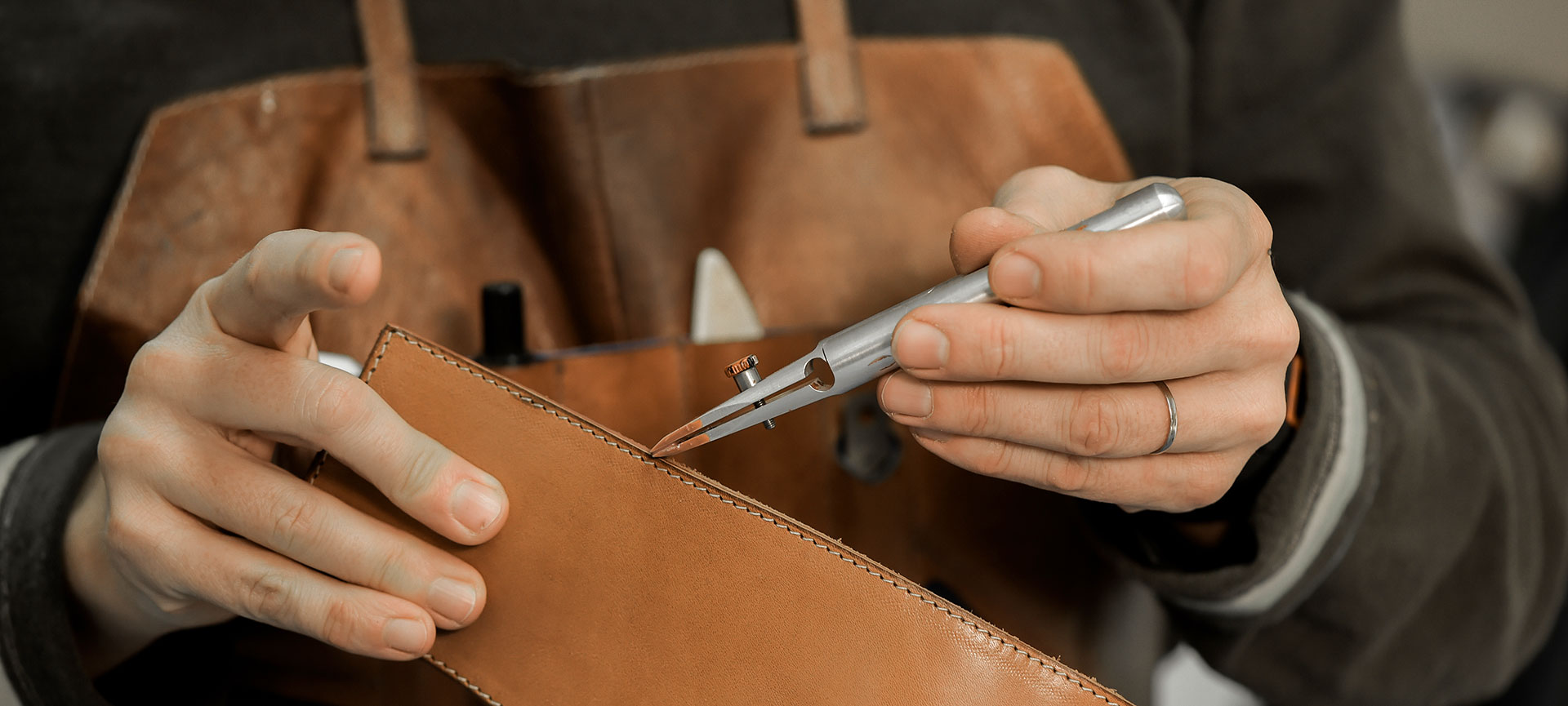
26 Jun Cutting Tools for Leather: 6 Essential Blades Every Crafter Needs
Picture this: you’ve sketched the perfect leather wallet design, the hide is laid out on your workbench, and you’re ready to make that first cut. Then panic sets in. Which blade do you reach for? A dull or wrong tool can ruin a $200 piece of veg-tan in seconds, turning excitement into expensive frustration. Choosing the right cutting tools for leather isn’t just about preference. It’s the difference between clean, professional edges and jagged, amateur-looking work that screams “first project.” Whether you’re slicing through thick saddle leather or shaping delicate chrome-tanned lambskin, your blades make or break the final piece.
What are the best cutting tools for leather?
The essential cutting tools for leather include the head knife (round knife) for versatile slicing, utility knives for straight cuts, rotary cutters for curves, skiving knives for thinning edges, swivel knives for decorative tooling, and strap cutters for uniform strips.
Why the Right Leather Cutting Tools Matter
Leather is unforgiving. Unlike fabric, you can’t simply re-cut a mistake without wasting material. The grain, thickness, and tannage of your hide all demand specific approaches. A blade that glides through soft garment leather might struggle (or crumble) when faced with 8oz bridle leather.
Beyond clean cuts, the proper tools protect your hands, reduce fatigue, and dramatically improve precision. Crafters who invest in quality cutting tools for leather often notice their entire workflow speeds up because they’re no longer fighting their equipment.
The 6 Essential Cutting Tools Every Leatherworker Needs
1. The Head Knife (Round Knife)
Considered the workhorse of traditional leatherwork, the head knife is a half-moon shaped blade that handles nearly every cutting task. Slicing straight lines, carving curves, skiving edges, and trimming corners are all within its range.
It does have a learning curve. Beginners often find it intimidating because of its size and razor edge, but once mastered, no other tool offers the same versatility.
2. Utility Knife or Box Cutter
Don’t underestimate the humble utility knife. With a fresh snap-off blade, it’s perfect for straight cuts along a steel ruler. Many professionals keep one within arm’s reach for quick trimming and breaking down larger hides.
- Affordable and widely available
- Replaceable blades stay sharp
- Excellent for straight cuts on thinner leathers
3. Rotary Cutter
Borrowed from quilting, the rotary cutter has become indispensable for curved work and long, sweeping cuts. The circular blade glides smoothly, making it ideal for thinner leathers and pattern work where you’d otherwise need to drag a knife.
4. Skiving Knife
Skiving means thinning the edges of leather so they fold cleanly or layer without bulk. A dedicated skiving knife (often with a French or English-style blade) shaves away material at a controlled angle. Belt makers, wallet crafters, and bag makers rely on this tool daily.
5. Swivel Knife
If you’re into tooling or carving decorative designs, the swivel knife is non-negotiable. Its rotating barrel lets you guide curves and tight turns with your fingertips while the blade cuts shallow lines into the surface of vegetable-tanned leather.
6. Strap Cutter (Draw Gauge)
Need uniform belt blanks, watch straps, or guitar straps? A strap cutter slides along the edge of your hide, producing perfectly parallel strips in seconds. Adjustable width settings make it useful for projects of any size.
Specialty Cutting Tools Worth Considering
Punches and Hole Cutters
Round drive punches, oblong punches, and strap-end punches technically cut through leather to create openings. They’re essential for stitching prep, buckle slots, and hardware installation.
Pricking Irons and Chisels
While primarily used to mark stitch lines, stitching chisels actually cut clean slits through leather, prepping the path for hand-saddle-stitched seams.
Edge Bevelers
Technically a cutting tool, the edge beveler shaves the corner of a leather edge, creating that rounded, professional finish you see on quality goods.
How to Keep Your Leather Cutting Tools Sharp
A dull blade is dangerous. It requires more force, which means more chance of slipping and either ruining your project or cutting yourself. Sharp tools are safer tools.
- Strop regularly. A leather strop with polishing compound should be used before every session.
- Sharpen with stones. Use progressive grits (start coarse, finish fine) every few weeks of heavy use.
- Store properly. Keep blades covered or sheathed to prevent edge damage.
- Avoid hard surfaces. Always cut on a poly cutting board or self-healing mat, not glass or metal.
Matching the Right Tool to Your Project
Not every project needs every tool. A wallet maker might rely heavily on a head knife and skiving knife. A belt maker can’t function without a strap cutter. Holster makers often prefer heavy-duty rotary cutters and robust utility knives.
If you’re just starting out and want a complete breakdown of what belongs in your kit beyond cutting implements, this guide on the essential gear every crafter needs to Master the Art of leatherworking is a helpful reference for building a balanced workshop.
Common Mistakes to Avoid
- Using one knife for everything. Different cuts demand different blade geometries.
- Forcing a dull blade. If you’re pushing hard, stop and strop.
- Ignoring blade angle. Most leather cuts work best with the blade held at a slight forward angle.
- Skipping the test cut. Always test on scrap before committing to your project piece.
Frequently Asked Questions
What is the best knife for cutting leather as a beginner?
A quality utility knife with snap-off blades is the most beginner-friendly option. It’s affordable, easy to control, and the blades stay reliably sharp. Once you’re comfortable, graduate to a head knife for greater versatility.
Can I use regular scissors to cut leather?
Light garment leather can be cut with heavy-duty fabric shears, but thicker leathers will dull standard scissors quickly and produce uneven edges. Dedicated leather shears or a rotary cutter give far better results.
How thick of leather can a rotary cutter handle?
Most rotary cutters work well on leather up to about 4-5oz (around 2mm). For thicker hides, switch to a head knife or heavy utility knife for cleaner control.
Do I need a cutting mat for leather work?
Absolutely. A self-healing cutting mat or thick poly board protects both your blade and your work surface. Cutting directly on wood or stone will quickly destroy your edge.
How often should I sharpen my leather knives?
Strop your blade before every session. Full sharpening on stones depends on use, but most crafters resharpen heavily used knives every few weeks. If you notice the blade tugging or producing fuzzy edges, it’s time.
What’s the difference between skiving and beveling?
Skiving thins a larger area of leather (usually for folding or layering), while beveling rounds off just the sharp corner edge for a finished, polished look.
Final Thoughts
The right cutting tools for leather transform frustrating projects into satisfying craft. Start with the basics: a sharp utility knife, a rotary cutter, and a quality cutting mat, then expand into specialty tools like head knives, skiving blades, and strap cutters as your skills grow.
Remember: sharp blades, proper technique, and the right tool for the job will always outperform expensive gear used incorrectly. Invest in quality where it counts, keep your edges keen, and let your craftsmanship speak for itself.