


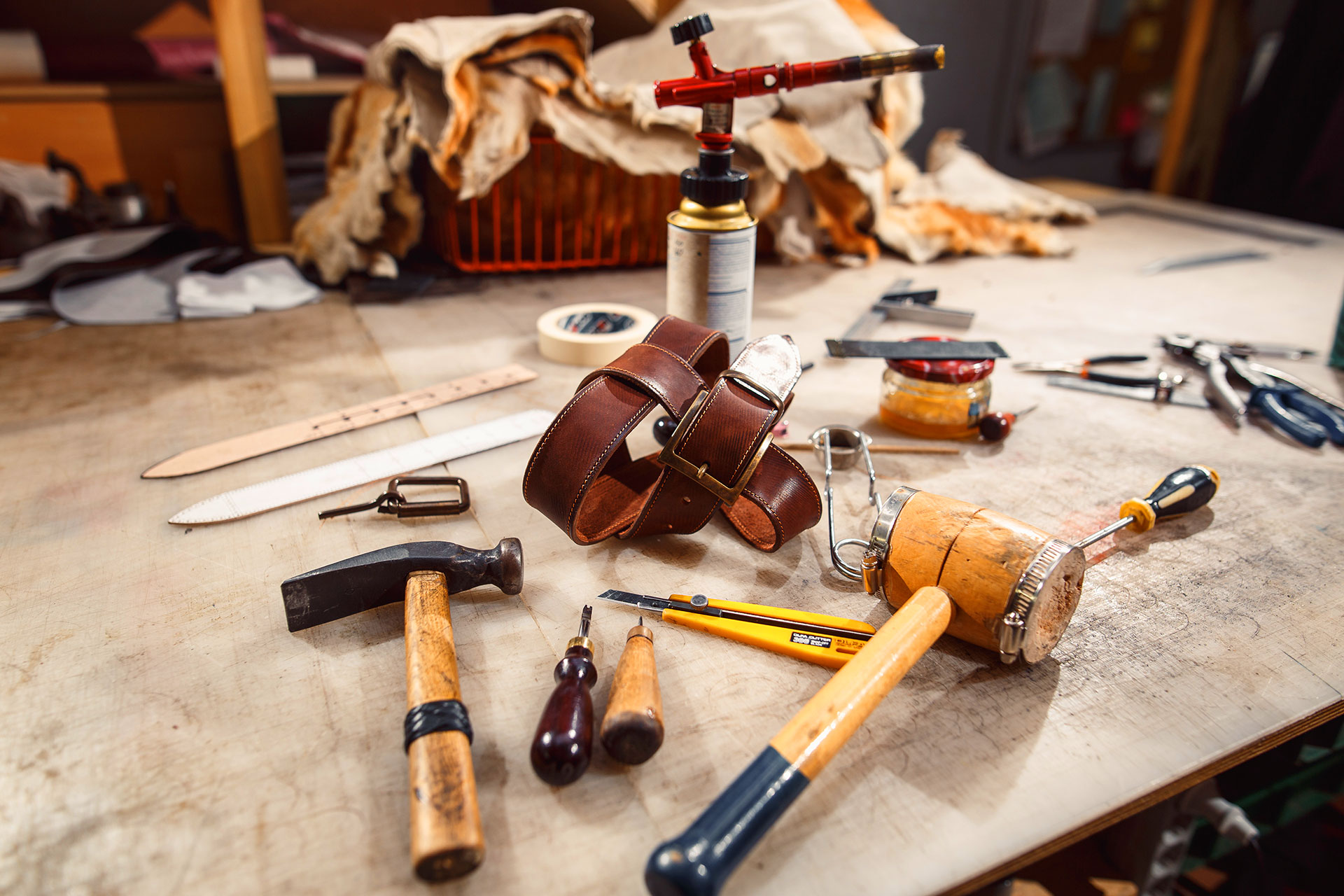
12 Jun Leather Working Tool Essentials Every Crafter Must Own
Picture this: you’re holding a strip of raw leather, the rich scent of hide fills your workspace, and your fingers are itching to transform it into something extraordinary. But here’s the catch, without the right leather working tool in your hand, that dream wallet, belt, or saddle stays trapped in your imagination. Whether you’re a curious beginner or a seasoned crafter looking to upgrade your bench, knowing which tools matter (and which are just shiny distractions) can make or break your craft.
What Is the Most Essential Leather Working Tool?
The most essential leather working tool is a sharp utility or rotary knife, used for cutting clean, precise lines in leather. Closely followed by a stitching awl, mallet, edge beveler, and pricking irons, these core tools form the foundation of nearly every leather project, from wallets to saddles.
Why the Right Leather Working Tool Changes Everything
Anyone who has tried hacking through veg-tan leather with a dull craft knife knows the pain. Bad tools fight you. Good tools? They practically guide your hands.
Investing in quality leather working tools isn’t about flexing on Instagram. It’s about consistency, safety, and producing work you’d actually want to put your name on. A well-made awl will outlast three cheap ones, and your stitch lines will thank you for it.
The Core Categories Every Crafter Should Know
Before you start hoarding shiny gadgets, let’s break the toolkit down into manageable categories. Most leather workers organize their bench around five primary functions.
✂️ Cutting Tools
Rotary cutters, head knives, utility knives, and skiving knives. These shape your raw material.
🪡 Stitching Tools
Pricking irons, stitching chisels, awls, needles, and waxed thread. The soul of saddle stitching.
🔨 Striking Tools
Poly mallets, rawhide mauls, and wooden hammers for driving punches and stamps.
✨ Finishing Tools
Edge bevelers, burnishers, slickers, and creasers that turn rough edges into polished beauty.
Beginner Leather Working Tools You Actually Need
Starting out can feel overwhelming. Online forums will swear you need 47 different tools before making your first keychain. They’re wrong.
Here’s the honest short list to get rolling:
- Sharp utility knife or rotary cutter for cutting patterns
- Steel ruler and cutting mat for straight, safe cuts
- Stitching chisels or pricking irons (2mm to 4mm spacing covers most projects)
- Saddler’s harness needles and waxed polyester thread
- Wooden or poly mallet to strike your punches
- Edge beveler in size #2 for clean borders
- Wooden burnisher or canvas scrap to slick edges
- Wing dividers for marking stitch lines
Master these first. They’ll carry you through 90% of beginner and intermediate projects. For a deeper dive into the broader category, this overview of leather making tools and supplies every crafter needs walks through exactly how each item fits into the workflow.
Intermediate Tools Worth Upgrading To
Once you’ve burned through a few hides and your stitching has stopped looking like a drunken zipper, it’s time to level up. Here’s where the craft starts getting addictive.
French Style Pricking Irons
These leave angled marks rather than punching all the way through. They give that distinctive slanted stitch line you see on high-end goods. Pair them with a diamond awl for buttery smooth stitching.
Strap Cutter
If you ever plan to make belts, dog collars, or guitar straps, a strap cutter pays for itself within three projects. Perfectly parallel strips, every single time.
Skiving Knife
Thinning leather at edges and joins separates amateur work from professional work. A sharp skiver lets you fold, lap, and finish edges that look factory-made.
Advanced Leather Working Tools for Serious Crafters
This is the rabbit hole. Once you’re here, your bank account will start sweating.
🛠 Pro Bench Upgrades
- Head knife: a curved blade that cuts, skives, and trims in one tool
- Splitter: precisely reduces leather thickness across an entire piece
- Embossing wheels and decorative stamps for custom branding
- Round drive punches in multiple sizes for hardware installation
- Stitching pony or clam to hold work while saddle stitching
How to Choose Quality Over Hype
Not every expensive tool is good, and not every budget tool is bad. Here’s a rough framework I lean on when shopping.
- Buy the cutting and stitching tools first. These are the ones where quality matters most.
- Check the steel. High carbon steel holds an edge longer than cheap stainless blends.
- Read maker reviews, not retailer reviews. Working crafters know which brands hold up.
- Avoid combo kits. They throw in filler tools you’ll never use.
- Buy once, cry once. A $40 awl beats four $10 awls every single time.
Caring for Your Leather Working Tools
Tools that get respect last decades. I’ve seen awls passed down three generations and still working perfectly.
- Wipe blades after every session and oil them lightly
- Strop edges regularly instead of sharpening (sharpen only when stropping fails)
- Store striking tools dry to prevent rust on the steel heads
- Keep punches and chisels off hard surfaces when not in use
- Use a dedicated mallet only, never a metal hammer, on chisels
Frequently Asked Questions
What is the best leather working tool for beginners?
A sharp rotary cutter paired with stitching chisels and a poly mallet is the best beginner combo. These three tools alone let you complete simple wallets, card holders, and keychains.
How much should I spend on my first leather working toolkit?
A quality starter set typically runs between $150 and $300. Skip the giant 50-piece Amazon kits, they’re usually low-grade steel and create more frustration than craft.
Do I need a sewing machine for leather work?
No. Most premium leather goods are hand-stitched using the saddle stitch method, which is actually stronger than machine stitching. A stitching machine becomes useful only if you scale to production.
What is the difference between pricking irons and stitching chisels?
Pricking irons mark the surface to guide an awl, while stitching chisels punch fully through the leather. Chisels are friendlier for beginners; irons give a refined look preferred by professionals.
How do I keep my leather working tools sharp?
Regular stropping on a leather strop loaded with polishing compound keeps edges razor sharp. Only resort to sharpening stones when stropping no longer restores the edge.
Final Thoughts
Choosing the right leather working tool is less about owning every gadget and more about building a focused, dependable kit that grows with your skills. Start with a sharp knife, quality stitching tools, a solid mallet, and a good edge beveler. Add specialty tools only when a project demands them.
The craft rewards patience, both in your technique and in your tool collection. Buy thoughtfully, maintain your gear, and your leather working journey will be smoother, more enjoyable, and far more impressive in its finished results. Now go make something beautiful.